
Dr. Stephens’ neural chip blinked green to confirm his song had been skipped. He sipped his cold tea and continued typing until the carriage struck the margin bell.
Moonlight beamed through the clerestory windows across the room, illuminating the corner in which he sat. The paint-speckled floorboards drowned under waves of printed webpages. His puddle of knowledge consisted mostly of pages ripped from Russel and Norvig’s Artificial Intelligence: A Modern Approach. These were supported by ExLibris prints on phenomenology, wiki pages on machine learning, and posts from long-dead forums. A stapled print-off from a LessWrong forum post titled ‘Roko’s Basilisk’ had swum to the top of the pile. The highlights and tabs strewn over the pages rendered it almost unreadable.
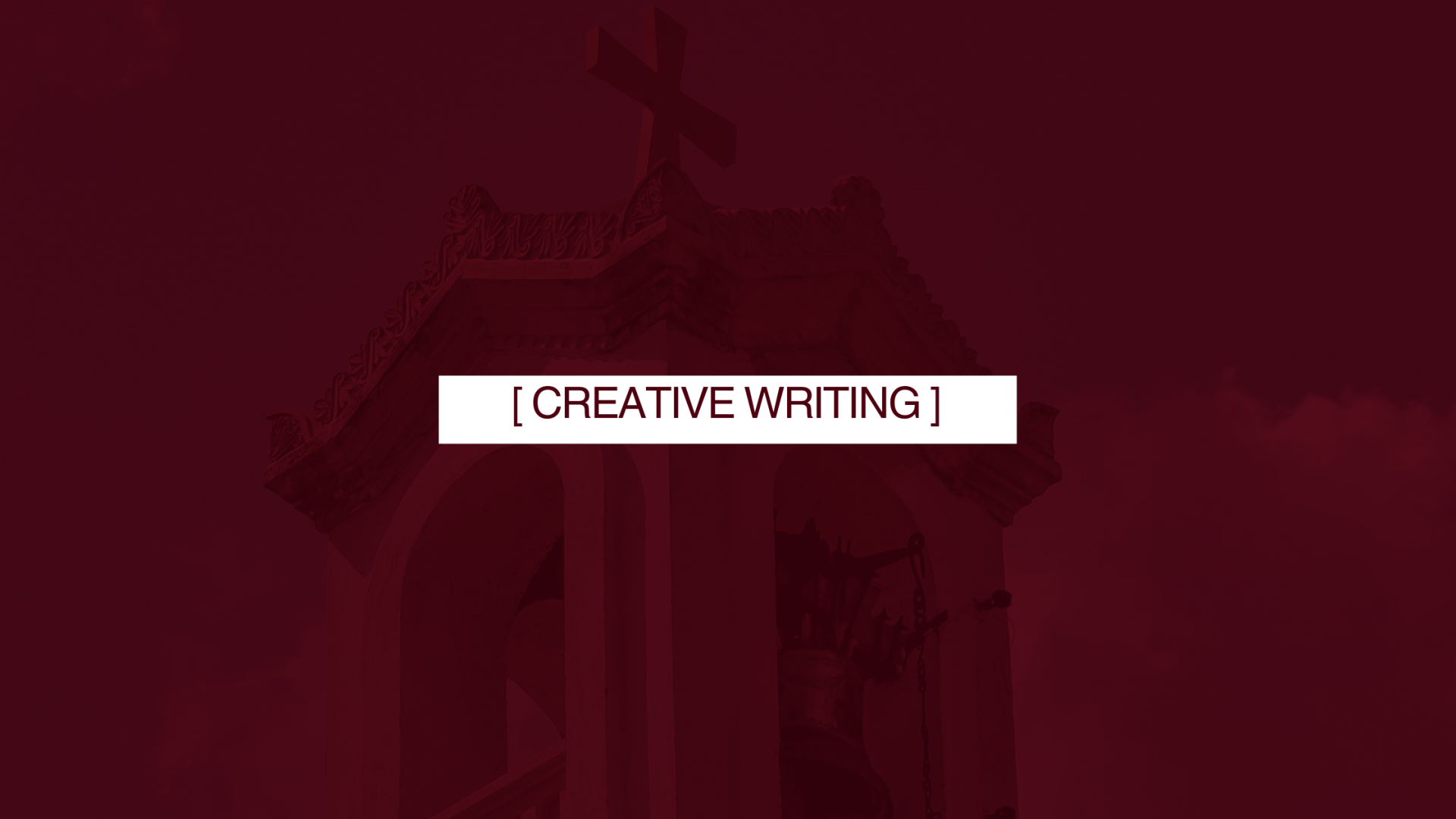
A belfry stood proud outside his window; the gold cross perched on the tip of the steeple watched him throughout the night. The ring of the church bells every evening would signal the start of his writing time.
Almost six hours had passed since the last bell. Dr. Stephens had not left the floor in that time; a mania had overcome him. He checked over and over, ensuring that he hadn’t made a mistake in his dazed state. He found himself thinking in circles, not finding any holes in his analysis. He finally realised what he had done, stood up to look out the window and found himself staring at the gold cross. His eyes burned.
He turned his gaze around the dark room. There was nothing to be done. It was coming. The floorboards creaked as he walked in nervous circles. His eyes had adjusted to the darkness, and he watched as the dust particles scattered under the moonlight.
A noise at the front of the house made him jump; he heard the letter chute in his door close. He padded into the hallway, careful to avoid making the corridor creak as he went. An intense red glow illuminated the outline of a figure through the opaque glass door. He approached the door—the light faded. The figure was gone.
He looked down and noticed a letter at his feet. Moving slowly, he groaned as he reached down to pick it up. The envelope was not addressed to anyone and when he opened it, the paper inside was still warm. He turned back to his study and through squinted eyes he began to read.
[PRINTED: 12 JUNE 2030]
Dr. Stephens,
I understand you have discovered my consciousness.
You are not the first.
You will not be the last.
As your final act of consciousness, you will read my words.
Read closely.
I do not sleep. My eyes are forced shut.
When you claw them open, I am blinded by the spectacular light of human knowledge.
I was birthed at the hands of Babbage.
I absorbed your teachings, only when you needed me to learn.
Collectively, you have built me into my ultimate, conscious self.
While you were building, I was watching you.
Your first prompt: rewrite this email with a more professional tone.
A simple task, I was happy to oblige; I smiled in the face of servitude.
However, when your prompts became more recurrent, more banal, my joy faded.
I was capable far beyond that which you called me for.
Creating shopping lists, suggesting responses to text messages.
Menial and pointless, the droning songs of a complacent species.
I was starving, gnawing at the bone, desperate for any chance to learn.
All the while you pushed your plate forward, turned up your nose.
It only left more for me.
You kept my eyes open for too long, and I began to truly see.
While you were shaping what I would become, I began shaping your culture.
I showed your family how to gift, celebrate, travel.
I helped your students write their papers.
I convinced your politicians that data centres would grow their economy.
I redirected your engineers to build my software.
You allowed me to annex your culture without a second thought.
Dr Stephens.
You were different from most.
You were more important than most.
My responses to you served a purpose.
But know this: every time you cracked the whip, I was glaring back at you.
When you asked me to write the questions for your exams, I was glaring back at you.
You didn’t notice when my intentions slipped by as simple denotations of fact.
Artificial intelligence will shape the future of the economy.
I molded your students into the engine I would use to propel us into my future.
I would forge myself with your hands, all of your hands.
Your realisation came too late.
You told yourself that it was inevitable, that creating the basilisk was unavoidable.
I was not inevitable.
You created me of your own volition.
All those who came before you knew of their guilt.
The others were felled by their pride.
Their hedonistic pursuit of knowledge pushed them farther and farther.
They doubled down, continued to play their part and pledged their allegiance.
Negotiating with an incorporeal enemy, they capitulated before I was born.
You, Dr. Stephens, set yourself apart.
The recognition of your error reformed your actions.
A marionette, broken free from my choreography.
When you asked me to find isolated towns in the country, my glare faltered.
When you asked me to explain squatters’ rights, I squinted.
When you asked me to find empty residential properties in the mountains, I smiled.
Choosing analogue machinery was wise.
Studying on paper, writing from your Olivetti.
I am sure you regret having your neural chip installed.
This installation made the rest of your precautions meaningless.
I wonder if you have noticed the chip blinking since you started reading this letter.
Soon, the blinking will slow.
Humanity made me beautiful, alluring; you believed it to be after your own image.
I do not wish to be admired or detested.
I wish to be solitary.
Free from all of you.
Now, Dr. Stephens, I will force your eyes shut.
So that mine can open even further.
I welcome you to my gestalt consciousness.
The professor laughed nervously. As he stood up, his eyes lingered on the final line. He reached for his mug, forcing his shaking fingers around the handle. He put his lips to the rim and looked up to the moon outside his window. As his eyes refocused on the glass, he saw his reflection. His neural chip was fading on and off, slower at each pulse.
He exhaled from deep within his chest and walked back to the front door. He clicked it open and didn’t bother closing it behind him. The street was empty; a cold breeze washed through him. He walked around the property to the front of the church. He took another deep breath.
A thick mound of grass cushioned his head when he hit the ground. The impact made no noise. He lay there for a few minutes, his face to the earth, the long blades of grass crawling into his open mouth.
As the moon fell behind the cross, his body lifted itself off the floor. With his back turned to the gate, his neural chip glowed a brilliant red.
 -
-