
Trigger warning: This article contains discussion of racism, racial violence, and genocide. Reader discretion is advised.
Annually, the 21st of March marks the International Day for the Elimination of Racial Discrimination (IDERD). Countries across the world recognise deeply entrenched, systemic racial imbalances. They commemorate the sixty-nine lives lost, and hundreds more injured, in the Sharpeville Massacre – where protestors assembled outside a police station to peacefully condemn apartheid laws. Every country reflects on these prejudices, except Australia.
Instead of deeply reflecting on racial injustices, the day has been reframed and renamed to “Harmony Day”, where Australians are encouraged to celebrate multiculturalism by wearing orange or attending a multicultural community event.
This initiative was done under the Liberal John Howard government in 1999, after Eureka Research was commissioned to investigate on behalf of the Department of Immigration and Multicultural Affairs. It was found that Australia’s “uncertainty surrounding values and national identity” were points of contention, enabling racial prejudice to occur. The Howard Government then developed Harmony Day as a positive campaign to push the agenda that unity between racial groups does, and has always, existed in Australian history.
There was no call to remember the victims of Sharpeville, and even less acknowledgement of racism in contemporary Australia. Harmony Day has been the subject of heavy controversy for whitewashing Australian history and reimagining the day as a superficial celebration of diversity, without taking meaningful measures to eliminate racism. The initiative perpetuates a long history of denial and dodges any discussions of accountability from racist institutions.
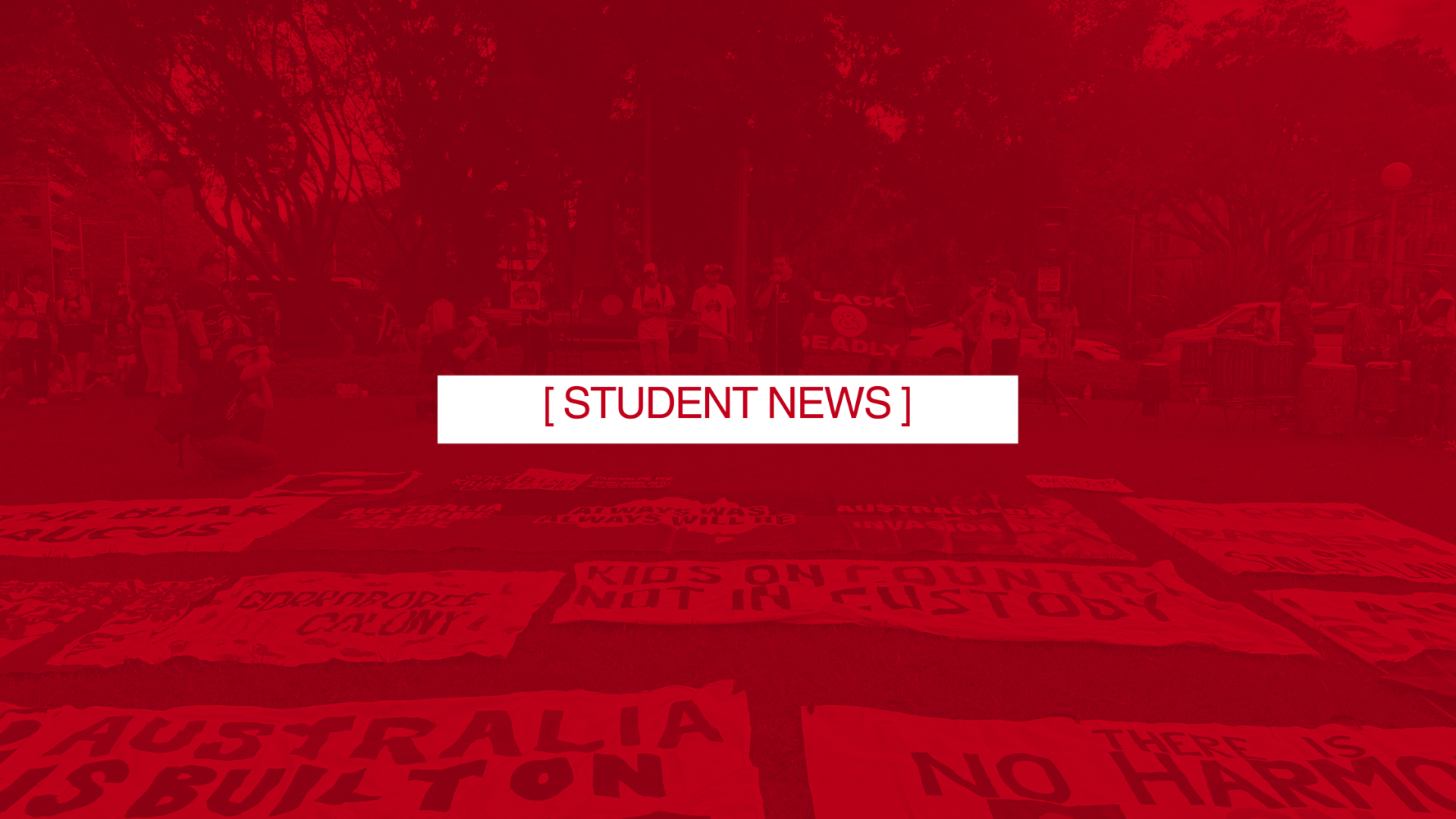
This year on March 21, Blak Caucus organised a ‘March Against Racism’, reclaiming the original name and purpose of the day. They held the Australian government accountable for their role in the forced dispossession of Aboriginal and Torres Strait Islander people, their complicity in the Palestinian genocide, and the upholding of systemic racism.
The rally began in Hyde Park, where a crowd slowly formed throughout mid-day, including a handful of protestors arriving from a Cuba Solidarity rally that wrapped up at Town Hall. Around 1 pm, Blak Caucus’ Paul Silva, a Dunghutti activist, began by introducing Auntie Lizzie Jarret.
Jarret, a long-time activist of Gumbaynggirr, Bundjalung and Dunghutti descent, was one of the first arrested at the Anti-Herzog protest in February and is a key organiser of Blak Caucus. She commenced her speech by pointing out the hypocrisy of so-called ‘Harmony Day’: “A word that sounds soft, peaceful and easy, but there’s nothing harmonious about erasure, there’s nothing harmonious about genocide, and there’s nothing fucking harmonious about racism”.
She acknowledged the origins of the day, stating that it was “a day born not from celebration, but from bloodshed”. Jarret reiterated that harmony does not exist without justice or truth, and ended her speech powerfully: “There’s no such thing as harmony on stolen fucking land”.
Paul Silva followed with a speech of his own, in which he called out Harmony Day’s inability to reflect society: “[“Harmony”] looks good on the surface, it sounds good, but I say: that doesn’t make it real”. He further explained that the Australian government doesn’t “get to talk about unity” whilst Aboriginal communities are “overpoliced, overincarcerated, and still fighting for basic human rights”.
Silva spoke further, stating, “We reject the label, we reject the performance from politicians, and we reject the idea of a slogan that replaces justice”, and finished his speech by calling for rallyers to stop disregarding their family lineage and to reject the label of being “Australian”.
Amao Leota Lu, a transgender Samoan, Pasifika and Fa’afafine activist, was introduced next. After introducing herself, she stated: “My thoughts and reflections on this day sit on the everyday occurrence of racial violence, both systemic and political, in the everyday spaces we occupy”. Leota Lu repeated in the speech that racial violence is “not accidental, it’s systemic and deliberate”.
Leota Lu discussed the importance of representation and reminded rallyers, “Let’s not forget about our sister girls and brother boys, an identity steeped in love, and respect, and cultural knowledge, and power. They are the people and culture whose lives were forgotten in the designing and implementing of white man’s laws.”
Next, Wasim El-Haj, a leader in School Staff for Palestine NSW, spoke. El-Haj, a science teacher, career advisor, and son of a Nakba survivor, was previously named NSW Career Advisor of the Year, but was recently fired from Sydney Girls High School for wearing a keffiyeh. El-Haj had been investigated by Federal education watchdogs who found no wrongdoing, but his recent removal was headed by the NSW Education Standards Authority.
Carrying out an 18 minute long speech, El-Haj criticised the selective protection of groups from discrimination: “Why are some communities prioritised on what hate they might be experiencing, while there’s communities that have been experiencing hate here for much longer, like the Aboriginal community? Where’s their voice?... What’s the process to be heard?”
With the first set of speeches concluded, the organisers put their talk of cultural unity to practice as Jarret welcomed the Karifi Ensemble, a West African drumming and dance band, who united the crowd with their traditional tunes and led the crowd in song and dance. The crowd then parted for a Palestinian Dabke performance by the Marrickville dance group Dahnoon Dabke.
At the conclusion of the cultural performances, the rally turned into a march, heading down Elizabeth Street with hordes of cops in tow, essentially taking the long way to avoid NSW Parliament. Ironically, the march passed by the Police Museum, with jeers from the crowd. The marching concluded at the Allen C Lewis Foundation within arm's reach of the Opera House.
Paddy Gibson of the National Tertiary Education Union rose to decry the Royal Australian Navy (RAN) as they held an anniversary naval display in the harbour. Gibson reminded, and informed, rallyers about the racist origins of the RAN: “...Do you know what the main reason, by Prime Minister Deacon, was at the time for why we need an Australian navy? To defend the White Australia policy”. Gibson continued his condemnation, stating, “We know very well that it is those systems of warfare that are the basis of racism as an ideology”. Unease around the phrase ‘Globalise the Intifada’ had no sway here, as Paddy led a chant of the phrase, in front of crowds gathered to watch passing Navy ships.
Next, to thunderous cheers, Jarret introduced a special guest speaker, Senator for Victoria, Lidia Thorpe. She spoke about the Government’s complicity in the genocide of Indigenous people and continued systemic racial violence, highlighting that “Racism has existed here for almost 250 years. We’ve had to deal with that, our ancestors have had to deal with that, we cannot let our future generations and our babies have to deal with that. It is violent. Racism is violent”. Seconds after Thorpe concluded her speech, a Navy Jet Fighter roared overhead, the crowd responding with a spontaneous chant of “Terrorist!”
With the last of the speeches done, the marchers peacefully dispersed. Those wearing keffiyehs mixed with the gathered sight-seers in Circular Quay as American-made Black Hawk Helicopters commenced an airshow above the harbour.
 -
-